
7 Benefits of Pilates for Strength, Flexibility, and Better Movement
Pilates is often associated with core exercises and flexibility, but its value extends well beyond either one. A thoughtful Pilates practice can help develop strength, movement control, coordination, balance, mobility, and greater awareness of how your body moves.
The benefits of Pilates come largely from its emphasis on controlled, intentional movement. Instead of racing through repetitions, Pilates encourages you to pay attention to positioning, breathing, stability, and the quality of each exercise.
At Chi Kinetics in Santa Cruz, Pilates is incorporated into a broader approach to personalized movement. That means the goal is not simply to complete a workout. It is to help individuals become more aware of movement while working toward their own strength, flexibility, balance, and fitness goals.
Here are seven reasons Pilates can be a valuable addition to a well-rounded movement routine.
1. Pilates Builds Strength Through Controlled Movement
Pilates can challenge muscles without relying exclusively on heavy weights or fast movements.
Exercises often require you to maintain control while moving your arms, legs, or torso. This creates an opportunity to work on strength and stability at the same time.
Depending on the exercise and equipment, Pilates may challenge:
- Abdominal and trunk muscles
- Hips and glutes
- Back muscles
- Legs
- Shoulders and arms
- Muscles involved in stabilization
The key is control.
Moving deliberately can make you more aware of which muscles are working and whether you are compensating elsewhere.
For beginners, this focus can also help establish a foundation before exercises become more complex.
2. Pilates Can Support Flexibility and Mobility
Flexibility and mobility are related, but they are not identical.
Flexibility generally describes how much a muscle can lengthen. Mobility refers more broadly to your ability to move a joint through an available range with control.
Pilates exercises can incorporate both.
Instead of treating stretching as something separate from exercise, certain Pilates movements combine strength with movement through a comfortable range.
Why does that matter?
Being flexible without adequate control does not necessarily translate into better movement. Pilates encourages you to develop awareness and control within the range you have.
That can make mobility work more purposeful.
3. Pilates Develops Core Control
"Core strength" is one of the phrases most commonly associated with Pilates.
However, core training is not simply about performing abdominal exercises.
Your trunk helps transfer force and maintain control when you reach, bend, rotate, walk, or perform other movements. Pilates exercises frequently require you to stabilize one area of the body while another moves.
This combination can make core work more functional than simply focusing on how many repetitions you can complete.
The goal is not to keep your abdominal muscles tense all day. It is to develop appropriate control when a movement requires it.
4. Pilates Encourages Better Body Awareness
One of the less visible benefits of Pilates is increased attention to movement.
During a session, you may be asked to notice:
- Where your weight is distributed
- How you are breathing
- Whether one side moves differently
- How your spine or pelvis is positioned
- Whether you are rushing an exercise
- Where you feel muscular effort
These details help turn exercise into active learning.
Over time, greater body awareness may help you recognize movement habits that you previously performed automatically.
At Chi Kinetics, this concept fits into a larger mind-body philosophy that draws from Pilates as well as Tai Chi, yoga, breathing, meditation, and other disciplines.
5. Pilates Challenges Balance and Coordination
Balance is not limited to standing on one foot.
It depends on your ability to organize movement and respond to changes in position. Coordination is similarly important because many everyday activities require different parts of the body to work together.
Pilates can challenge these skills through controlled movement sequences and exercises that require stability while another part of the body moves.
This makes precision important.
Rather than trying to perform a movement quickly, slowing down gives you an opportunity to notice where control becomes more difficult.
That information can help an instructor decide how to modify or progress an exercise.
6. Pilates Can Be Personalized
Not everyone begins Pilates with the same body, experience, or goals.
One person may want to improve overall strength. Another may prioritize mobility or balance. A beginner may first need to learn fundamental movements and become familiar with Pilates apparatus.
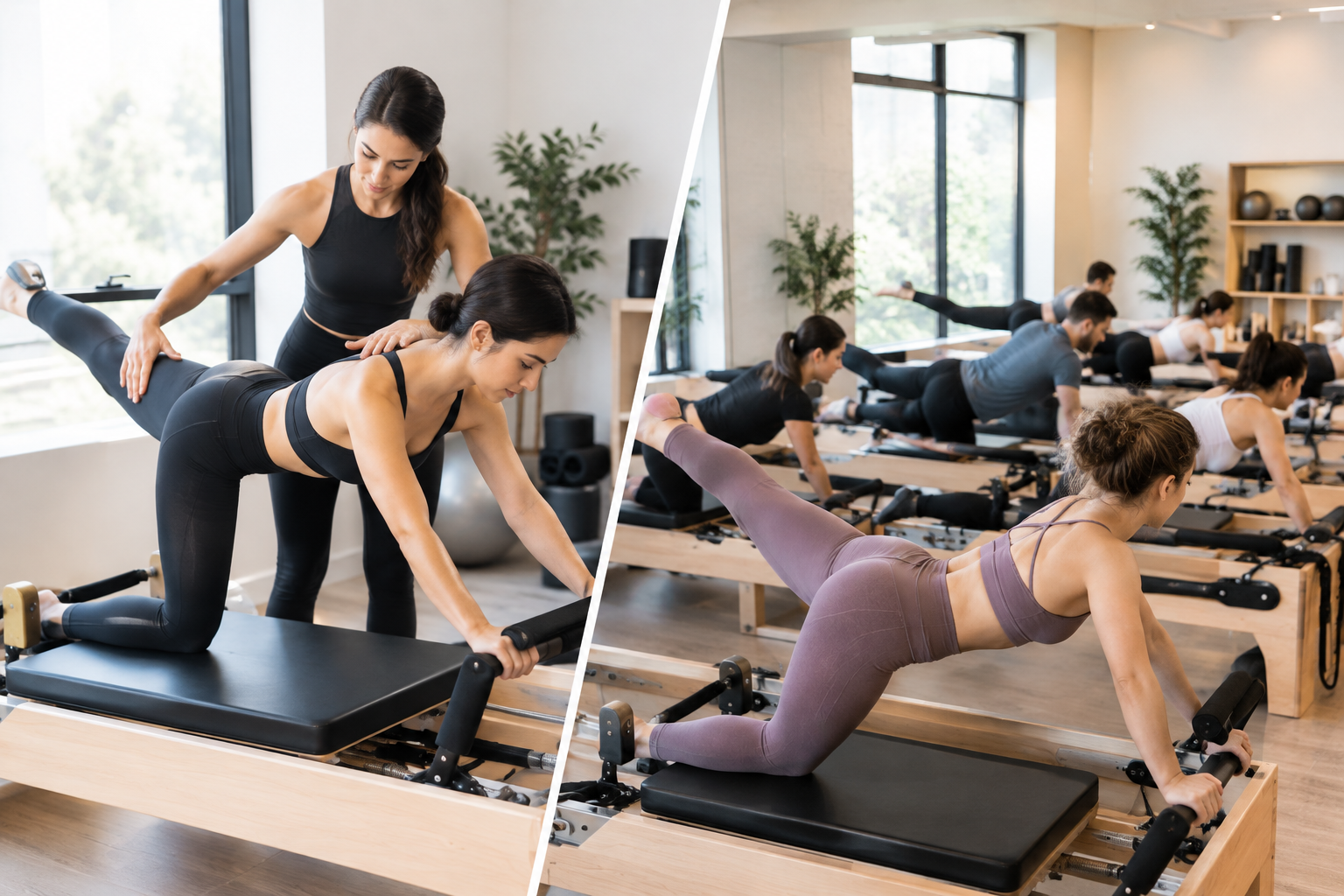
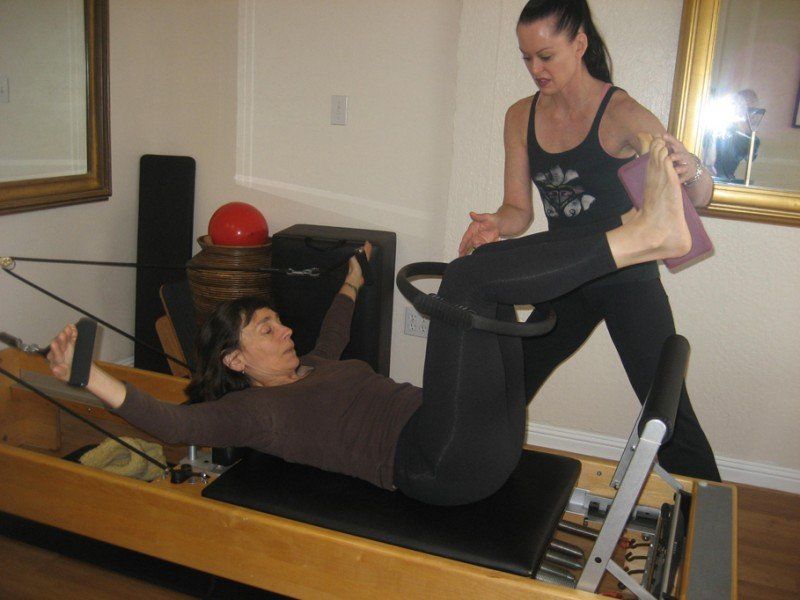
Private Pilates allows instruction to reflect those differences.
Exercises can be selected based on factors such as:
- Current movement ability
- Pilates experience
- Individual goals
- Comfort with specific exercises
- Desired level of challenge
- Movement quality and control
Personalization does not mean every session needs to be easy. It means the challenge should have a reason.
7. Pilates Encourages Mindful Exercise
Exercise is often treated as something to complete as quickly as possible.
Pilates asks for attention.
Breathing, tempo, positioning, and movement quality can all become part of the exercise rather than background details.
That makes Pilates particularly compatible with a broader mind-body approach.
Expert Insight: Precision Can Matter More Than Repetitions
A common exercise mistake is assuming that more repetitions always produce a better session.
With Pilates, five controlled repetitions can sometimes provide more useful information than rushing through 15.
If your technique changes as you become tired, continuing to add repetitions may not be the most productive choice. An instructor can watch for changes in positioning, breathing, range, and control and determine when an exercise should be adjusted.
This is one advantage of individualized Pilates instruction: feedback can happen while you are moving, not after the workout is over.
How Can Beginners Get More From Pilates?
If you are new to Pilates, focus on learning rather than performing perfectly.
Start by:
- Asking questions when an exercise is unclear.
- Moving at a pace that allows you to maintain control.
- Paying attention to breathing and positioning.
- Communicating when something feels uncomfortable.
- Allowing technique to develop before chasing intensity.
Consistency also matters. Becoming familiar with Pilates movements takes time, especially when you are learning to pay attention to details that may have gone unnoticed in other workouts.
Frequently Asked Questions About Pilates
What are the main benefits of Pilates?
Pilates can help develop strength, flexibility, mobility, balance, coordination, core control, and body awareness through deliberate, controlled movement.
Is Pilates good for building strength?
Pilates can challenge multiple muscle groups through bodyweight exercises, resistance, stabilization, and Pilates apparatus. The type of strength work depends on the exercises and individual program.
Does Pilates improve flexibility?
Many Pilates exercises involve moving through controlled ranges of motion, which can make flexibility and mobility part of the overall practice.
Is Pilates suitable for beginners?
Pilates can be introduced to beginners by selecting appropriate exercises and focusing first on movement fundamentals, control, and technique.
Where can I try Pilates in Santa Cruz?
Chi Kinetics offers private training and Pilates apparatus sessions in Santa Cruz as part of its personalized mind-body movement approach.
Explore Personalized Pilates in Santa Cruz
The benefits of Pilates go beyond completing a workout. Pilates encourages you to develop strength while paying attention to mobility, coordination, balance, breathing, and movement quality.
The most useful practice is one that reflects your starting point and goals.
If you are interested in Pilates in Santa Cruz, personalized instruction can help you learn the fundamentals and determine how Pilates fits into your broader movement routine.
Contact Chi Kinetics to learn more about private training and Pilates apparatus sessions.